
Loading...
Salinas fog and field dust enter your home through invisible gaps in your attic ceiling. Sealing those pathways cuts energy loss and cleans up the air your family breathes every day.
Attic air sealing in Salinas means finding every gap, crack, and penetration where your attic connects to your living space and plugging them shut with foam and caulk - most jobs are finished in two to six hours with no need to leave your home.
Many homeowners assume that adding insulation to an attic is enough to stop energy loss. But insulation slows heat movement; it does not stop air from flowing through gaps around light fixtures, pipes, and wall top plates. Those gaps let your conditioned air escape upward and pull in the cool, damp marine air that Salinas is known for. Attic air sealing closes those pathways first, so any insulation already in place, or any that comes after, can actually do its job.
If your home has both sealing and insulation needs, this service pairs well with our broader air sealing services to address the crawl space and wall penetrations at the same time. Homeowners tackling a larger project should also ask about our crawl space vapor barrier work, which addresses moisture from below rather than above.
If your PG&E bill seems out of proportion to how much you actually use your heating or cooling, air leaking through the attic is one of the most common causes. Salinas homes built before the 1980s were not designed with energy efficiency in mind, and the gaps that were acceptable then are costing you money every month. This is one of the clearest signals that an assessment is worth your time.
Stand in a bedroom or hallway on a cool Salinas morning and notice whether the ceiling feels noticeably colder than the rest of the room. Drafts near recessed lights or ceiling fans, or rooms that never reach the temperature on your thermostat, are strong signs that attic air is moving into your living space through unsealed gaps.
Salinas's marine layer brings cool, damp air overnight, and if your attic has gaps, that air gets drawn down into your home as temperatures shift in the morning. A faint musty or dusty smell that is most noticeable early in the day, especially in bedrooms or hallways, often traces directly back to attic air infiltration. This is a pattern Salinas homeowners describe regularly.
Older recessed light fixtures are one of the biggest air leak points in any attic. If you see a faint ring of dust or discoloration around the edge of a ceiling light, that is a visible sign that air is moving through the fixture from the attic. Warm air rising through those gaps in winter, and cool air dropping through them in summer, is a direct, ongoing energy drain.
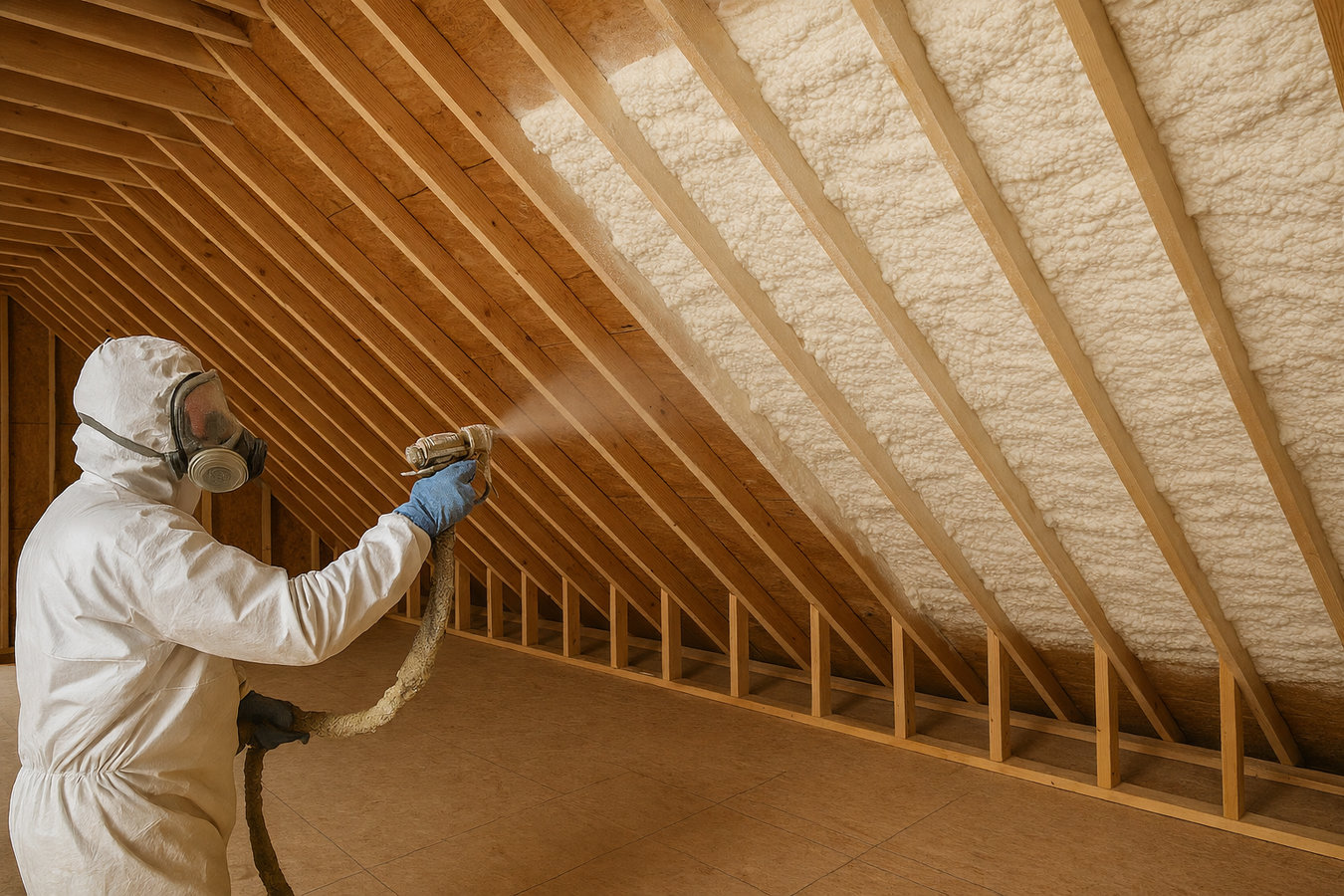
We access your attic through the existing hatch, typically in a hallway or closet, and work through every penetration systematically. That means light fixture boxes, electrical wires, plumbing pipes, HVAC ducts, wall top plates, and any framing gaps where attic air can bypass the insulation layer. We use a combination of spray foam, caulk, and rigid blocking materials depending on the size and type of each gap.
Attic air sealing is often the first step before adding new insulation. Homeowners who want to increase their attic insulation level should get the sealing done first, because blown-in or batt insulation sitting on top of unsealed gaps never fully delivers its rated performance. We can assess whether your home benefits from pairing this service with our broader air sealing services that cover the crawl space and other parts of the building envelope.
Homeowners dealing with moisture concerns specifically should also ask whether a crawl space vapor barrier makes sense alongside attic air sealing. The two services address moisture from different entry points and together give you much better control over indoor air quality and humidity levels.
Best for homes with multiple pipe, wire, and fixture penetrations through the ceiling that have never been sealed, common in Salinas homes built before 1985.
Suited to homes where the gap between interior wall framing and the attic floor is open, allowing conditioned air to escape along every wall line in the house.
Ideal for homes with older can-light fixtures that are open to the attic, which are among the largest single sources of air leakage in many Salinas homes.
Addresses the attic access point itself, which is often uninsulated and unsealed, providing a direct pathway between the attic and the conditioned hallway below it.
Salinas sits at the mouth of the Salinas Valley just a few miles from Monterey Bay, which means cool, damp marine air rolls in most mornings and evenings throughout the year. That persistent moisture is not just uncomfortable; when your attic has unsealed gaps, it gets drawn down into your living space as temperatures shift, bringing humidity and allergens with it. Sealing those pathways is especially worthwhile here compared to drier inland cities because the moisture pressure is year-round, not seasonal.
A large share of Salinas homes were built in the 1950s through 1970s, before energy efficiency was a building priority. Those homes were framed with techniques that left open pathways between the attic and the living space around every pipe, wire, and ceiling light. If your home is more than 40 years old, there is a very good chance it has never been air sealed. PG&E, the local utility, offers rebates for qualifying energy efficiency work in the Salinas area that can offset a meaningful portion of the cost.
The Salinas Valley's agricultural environment adds another dimension. Fine field dust and pollen are in the outdoor air almost every day, and gaps in the attic floor act as entry points for that air to drift into bedrooms and hallways. Residents of Watsonville, Morgan Hill, and Gilroy face similar agricultural air quality conditions and can call us for the same service.
Reach us by phone or the contact form and we ask a few basics, including your home's age and any comfort or energy issues you have noticed. We reply within one business day and schedule a free in-home assessment at a time that works for you. There is no commitment required at this stage.
A technician inspects your attic through the access hatch, looking at existing insulation levels, the number and condition of penetrations, and any signs of moisture or damage. The visit takes 30 to 60 minutes, and we walk you through what we found before leaving so you know exactly what you are dealing with.
You receive a written estimate that explains what will be sealed and what it costs. If you qualify for PG&E rebates or state incentive programs, we flag that before you sign anything. Take your time reviewing the quote; there is no deadline pressure to decide.
The crew works in your attic for two to six hours depending on the scope. You can stay home throughout. When done, we walk you through what was sealed, provide any documentation needed for rebate claims, and confirm your home is fully usable immediately. No curing period keeps you out of any rooms.
Free in-home attic assessment. Written quote, no obligation. PG&E rebate guidance included at no extra charge.
(831) 243-7355We cover Salinas, Monterey, Seaside, Marina, Watsonville, Santa Cruz, Gilroy, Morgan Hill, Hollister, Los Gatos, Campbell, and Santa Clara. That reach means we understand the housing stock and climate conditions across the whole service area, not just one zip code.
PG&E is the local utility for Salinas, and qualifying energy efficiency work can earn you a rebate that reduces your out-of-pocket cost. Federal tax credits for weatherization work are also available. We help you understand what you qualify for before you commit to anything.
We do not quote attic air sealing over the phone. Every job starts with a site visit where we count the penetrations, note the attic conditions, and explain what we found. That means no surprises in the quote and no missed gaps in the finished work.
Every project is handled by an experienced crew that knows Salinas homes and the coastal conditions here. We document the work with photos and leave you with records you can keep on file. We encourage every homeowner to ask for references before hiring any contractor, us included.
Salinas homeowners have enough things to worry about without wondering whether a contractor actually finished the job properly. We show you the work, explain what was sealed and why, and leave you with documentation you can keep on file for rebate claims or future home sales.
Block ground moisture from rising into your home's structure, addressing the source of dampness from below rather than above.
Learn moreA whole-home air sealing assessment that addresses crawl space, wall, and attic penetrations in a single project.
Learn moreSpring and fall are the best times to seal before Salinas's marine air season peaks. Call today to get on the schedule before spots fill.