
Loading...
Salinas's marine fog pushes moisture into older homes all year. Closed-cell foam is the one insulation type that blocks both heat and moisture in a single application, and most jobs are done in one day.
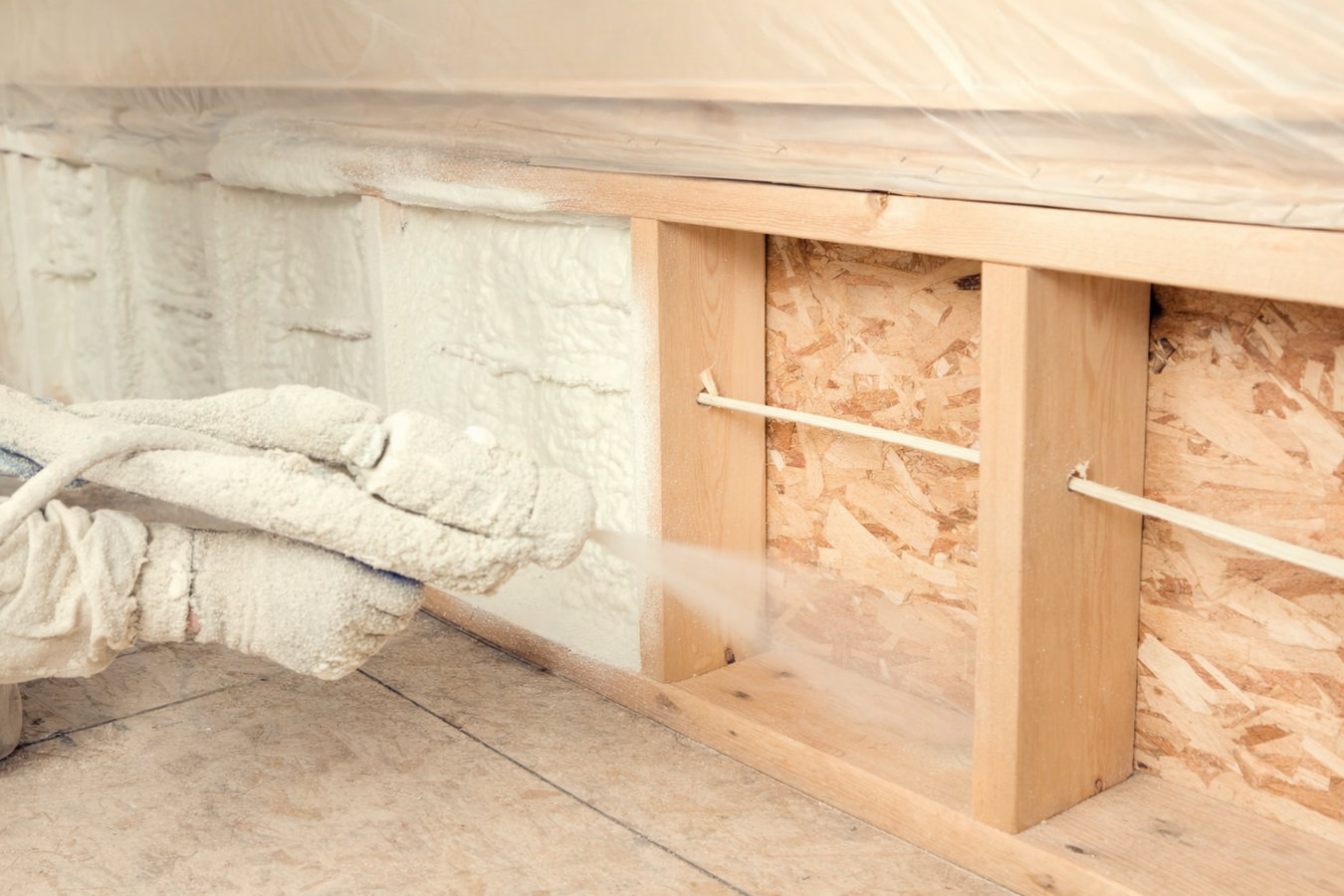
Closed-cell foam insulation in Salinas is a two-part spray that expands and hardens into a dense, rigid layer, sealing air gaps and blocking moisture at the same time. Most jobs cover an entire attic or crawl space in one day, with the foam reaching full hardness within 24 hours of application.
Most insulation types slow heat but do nothing about air or moisture. Closed-cell foam handles all three because it expands to fill every crack and gap it touches. For Salinas homes near the coast, that dual action, blocking both heat and the damp marine air, is often more valuable than the R-value alone. Homeowners frequently pair it with spray foam insulation upgrades throughout the home to address all the major leakage zones at once.
If your home was built before 1985, the odds are good that whatever insulation exists has compressed, shifted, or absorbed moisture over the decades. A contractor can assess the current state in about 30 minutes and tell you whether it is worth keeping or replacing.
Most of these signs are easy to spot without any equipment.
If you notice a faint musty smell before the day warms up, especially near the crawl space or in lower rooms, damp coastal air is moving through your home's structure. That kind of slow moisture buildup can eventually lead to mold. Better air sealing is one of the most effective ways to stop it.
If your PG&E bill has been rising year over year but your habits have not changed, the insulation may be failing or was never adequate to begin with. Older Salinas homes lose conditioned air through the attic and crawl space at a rate that adds up to hundreds of dollars a year. If you can see ceiling joists clearly from your attic, the insulation is too thin.
If certain rooms always collect dust faster than others or feel stuffy no matter how much you ventilate, air is leaking in from the attic or crawl space. In Salinas, that air often carries fine agricultural dust from the surrounding valley. Sealing those pathways with spray foam stops the dust at its source.
Mice and insects can squeeze through gaps as small as a dime, often in places you cannot easily see, around pipes or in attic eaves. If you keep finding evidence of pests despite sealing obvious gaps, the home likely has entry points spray foam can close permanently. This is a common frustration for homes near Salinas's agricultural areas.
The most common application is the attic, where heat loss and moisture infiltration are greatest. A properly installed closed cell spray foam layer in your attic creates both a thermal barrier and an air barrier, so conditioned air stays inside and summer heat stays out. For Salinas homes that run air conditioning during the warm afternoon hours after morning fog burns off, this is often where the biggest energy savings show up first.
Crawl spaces are the second most impactful location, especially given Salinas's year-round moisture pressure. Closed-cell foam applied to crawl space walls and the rim joist, the gap where your floor framing meets the foundation, seals the most common entry points for both damp air and pests. Homeowners who tackle both the attic and crawl space at once see the most dramatic results. We also offer full open-cell foam insulation for interior applications where a softer, more flexible material is a better fit.
Wall cavities in older Salinas homes can also be addressed with foam, though this typically requires drilling small access holes and injecting the material without opening walls. If your home has never had wall insulation, the comfort improvement can be noticeable. A site visit is the only reliable way to determine which approach is right for your specific walls and construction.
Best for homes where heat loss and moisture infiltration are primarily coming through the roof deck or attic floor, covering the largest surface area in one application.
Best for homes with persistent moisture, cold floors, or pest pressure entering from below, sealing the rim joist and crawl space walls simultaneously.
Best for homes where cold air, moisture, and pests are entering at the foundation line, one of the most commonly overlooked air-leakage points in older Salinas construction.
Best for older homes with uninsulated wall cavities where opening walls is not practical, delivering a significant comfort upgrade without a full renovation.
Salinas sits in the Salinas Valley just a few miles from Monterey Bay, and that proximity shapes the indoor environment in ways that matter for insulation. The marine fog rolls in most mornings and the air stays damp even through the summer, which is different from drier inland California cities where insulation only has to manage heat. Here, moisture resistance is not a bonus feature, it is a primary requirement.
A large share of Salinas homes were built between the 1950s and the 1980s with minimal insulation requirements. If your home is in one of the neighborhoods between downtown and the east side, there is a good chance the attic and crawl space have original insulation that has compressed or absorbed moisture over the decades. The agricultural dust from the surrounding valley also makes air sealing more valuable here than in most California cities, because the dust has fewer entry points when gaps are properly sealed.
We work across the full coastal region. Homes in Monterey, Marina, and Seaside face the same coastal moisture conditions and benefit from the same closed-cell foam approach that works in Salinas.
The Spray Polyurethane Foam Alliance publishes installation standards and homeowner guidance for spray foam projects. California permit requirements for insulation work are administered through the California Energy Commission.
We reply within 1 business day. No verbal guesses over the phone, the price goes in writing after we see the space.
We ask a few basic questions about the age of your home and which areas you want insulated. We do not give quotes without a site visit, because the actual condition of your attic or crawl space matters too much to guess.
We walk through the areas to be insulated, check for moisture or mold, and measure the space. The visit takes 30 to 60 minutes and ends with a written estimate showing what will be done, how thick the foam will be applied, and the total cost.
If a permit is required, we handle the application through the City of Salinas Building Division. This step can add a few days to the timeline, but it protects you by putting the work on record and ensuring a city inspector verifies it.
You and your pets leave for the day. The crew sprays the foam, and you get a specific re-entry time before they start. Before they leave, we walk you through the finished work so you can see the coverage yourself.
Free written estimates. Experienced local contractor. We reply within 1 business day.
(831) 243-7355We work in Salinas and the surrounding coastal communities year-round, so we understand what the marine fog actually does to older homes. Moisture assessment is part of every job we do, not an optional add-on.
We pull the required permits from the City of Salinas Building Division and coordinate the inspection. That means a city inspector independently verifies the work, and you have documentation on record when it is time to sell.
We cover all 12 service areas in our zone, from Salinas to Santa Cruz to Hollister. That breadth means we see the full range of coastal and inland conditions and know which approach delivers results in each climate context.
The Spray Polyurethane Foam Alliance publishes installation standards that cover thickness, application temperature, and surface preparation. We follow those standards on every job and walk you through the coverage before we leave so you can see it yourself.
Closed-cell foam installed correctly is a decades-long investment. We take the assessment seriously, apply it at the right thickness, and document the work so you have a record that protects your home's value. That is why Salinas homeowners call us back for their next project.
A softer, more flexible foam option better suited for interior walls and sound control where vapor resistance is less critical.
Learn moreFull spray foam service covering attics, crawl spaces, walls, and rim joists as a complete home insulation upgrade.
Learn moreSalinas's coastal fog season runs year-round. The sooner your attic and crawl space are sealed, the sooner you stop paying to condition air that is leaking out. Call or request an estimate today.