Loading...
Your attic may be losing heat every single night. We fill every gap with blown-in fiberglass or cellulose so your home stays comfortable and your heating costs drop.
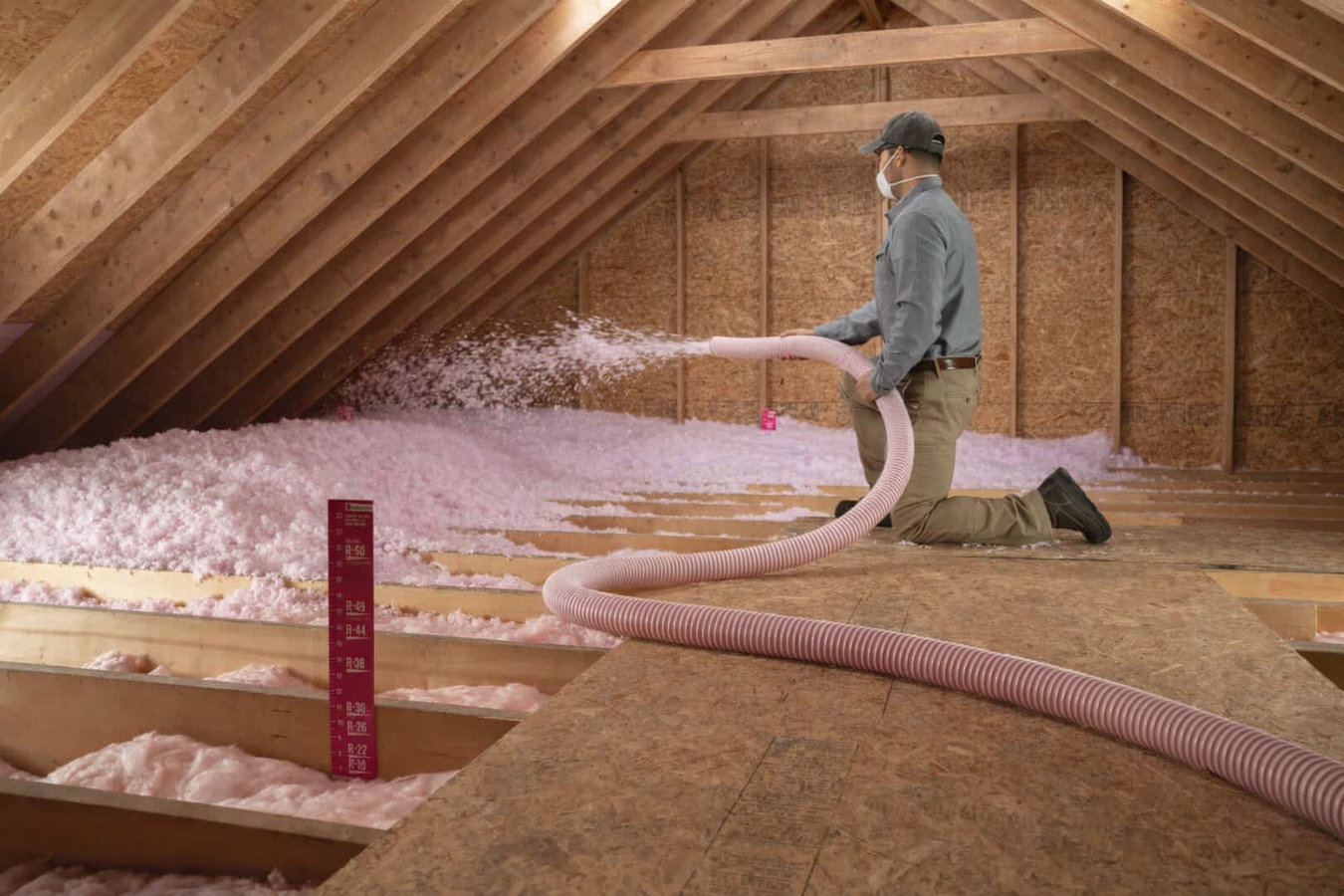
Blown-in insulation in Salinas fills your attic or wall cavities with loose fiberglass or cellulose material pumped through a hose until the space reaches the right depth, covering joists, pipes, and odd corners without gaps - most attic jobs take a single day. Unlike rigid batts that leave gaps at edges and obstructions, blown-in material conforms to your attic's exact shape, so you get consistent coverage across the whole floor.
In Salinas, the concern is not just winter cold. The marine layer rolling in from Monterey Bay keeps humidity high and temperatures cool most of the year, and a poorly insulated attic lets that damp air chill your home from the top down. Many homeowners find their heating system runs almost constantly just to maintain a comfortable temperature, which is a reliable sign that insulation is the problem.
Blown-in insulation pairs naturally with attic insulation work. If your attic needs a full upgrade, combining blown-in material with proper air sealing gives you the most complete result for the investment.
Salinas's marine layer keeps humidity levels high year-round. If your home feels chilly or slightly damp even when the heater is running, heat is escaping through an under-insulated ceiling. You should not need to run the heat constantly just to stay comfortable on a 58-degree morning.
If you peek into your attic with a flashlight and can clearly see the wooden beams running across the floor, the insulation is too thin. Properly insulated attics have material deep enough to cover those joists entirely. This is a quick check any homeowner can do.
When the attic above a room is poorly insulated, that room becomes a thermal sponge. If one bedroom or a top-floor hallway is always the cold outlier in your home, the attic directly above it is the first place to look. Blown-in material fills the entire floor evenly.
A large portion of Salinas housing was built in the postwar decades when insulation standards were minimal. Even insulation installed correctly in 1975 has lost much of its effectiveness by now. If your home has no record of insulation work, it is almost certainly under-insulated.
We install blown-in insulation in attics, existing wall cavities, and hard-to-reach spaces throughout Salinas and the surrounding Monterey Bay area. Fiberglass blown-in material is our standard recommendation for coastal climates because it holds its shape and resists moisture better than cellulose in high-humidity conditions, though we carry both options and will explain the tradeoffs for your specific home. Every job starts with a measurement of what you already have so we only install what you actually need.
For homes with little or no existing insulation, we combine blown-in work with air sealing around penetrations, light fixtures, and the attic hatch before the material goes in. Sealing those gaps first means the insulation performs at its rated level rather than fighting constant air movement. If your attic has old, degraded insulation that has compressed down to almost nothing, we can remove it before adding new material. Our home insulation service covers the full scope if multiple areas of your home need attention at once.
We also install blown-in insulation in wall cavities on older homes where batts were never added or have shifted out of place. Wall insulation is more involved than attic work because the material is blown through small holes drilled from the exterior or interior, then patched. It is worth the effort in homes where walls account for a meaningful share of heat loss.
Best for homeowners who want the fastest payback on a clear comfort and energy problem.
Right for older homes with minimal or no wall insulation where batts cannot be added without opening walls.
Preferred in coastal and humid climates where moisture resistance matters.
A good fit for homeowners who want a recycled-content product and have well-ventilated attic spaces.
Most people associate insulation with extreme cold, but in Salinas the bigger issue is the persistent marine layer. Cool, damp air rolls in from Monterey Bay most mornings and evenings, even in July. Without adequate attic insulation, that moisture-laden air makes your home feel cold and slightly damp regardless of the season. Blown-in insulation creates a consistent thermal barrier across the entire attic floor, which is exactly what this climate requires.
A large share of Salinas homes were built between the 1950s and 1980s, well before California adopted its current energy efficiency standards. In Salinas neighborhoods like Alisal and the areas near downtown, original insulation is often less than two inches deep, or missing entirely near the eaves where the attic floor meets the roofline. Blown-in material fills those edge areas where rigid batts cannot reach without being cut and forced into place.
Homeowners in Marina and Seaside face similar coastal conditions, and we regularly work in those cities as well. PG&E serves all three areas and currently offers rebates for qualifying insulation upgrades, which can reduce your out-of-pocket cost. We are familiar with the current programs and can help you identify whether your project qualifies. You can also verify current offers at pge.com.
We will ask a few basic questions about your home and schedule your free in-home estimate within one business day.
We go into your attic, measure what is already there, and flag any air sealing work that should happen before insulation goes in.
The blowing machine stays outside. A hose runs to the attic hatch and we fill the floor to the target depth, leaving depth markers so you can verify coverage yourself.
Before we leave, we walk you through the completed attic so you can see the work. Blown-in insulation is effective immediately - no curing time required.
Free estimates. No pushy upsells. We measure what you have and recommend only what you actually need.
(831) 243-7355We place physical depth stakes throughout your attic before we leave, so you can verify coverage yourself with a flashlight. You do not have to take our word for it - you can see exactly what was installed.
We have installed blown-in insulation in homes across every Salinas neighborhood, from the older ranch houses near Alisal to newer subdivisions on the east side. We know what to expect in each type of home.
Our work is performed by experienced local crews who know Salinas homes. We document each job with photos and give you a written scope before we start, so you know exactly what was done.
We are familiar with the current PG&E energy efficiency rebate programs and will tell you upfront whether your project qualifies. Many Salinas homeowners receive a rebate that meaningfully reduces their final cost. See current programs at{' '} pge.com.
References and documented photos from recent local jobs are available on request. We pull permits when required and handle the paperwork so you do not have to navigate city requirements on your own. Our work meets California Title 24 energy standards for the Central Coast climate zone, which matters if you ever sell your home or pull permits for other work.
Comprehensive insulation upgrades across every part of your home, from attic to crawl space, handled in a single coordinated project.
Learn moreFull attic insulation assessments and upgrades for Salinas homes, including removal of old material when necessary.
Learn moreMost Salinas attic jobs are scheduled within the week. Call now or submit a request and we will follow up within one business day.