
Loading...
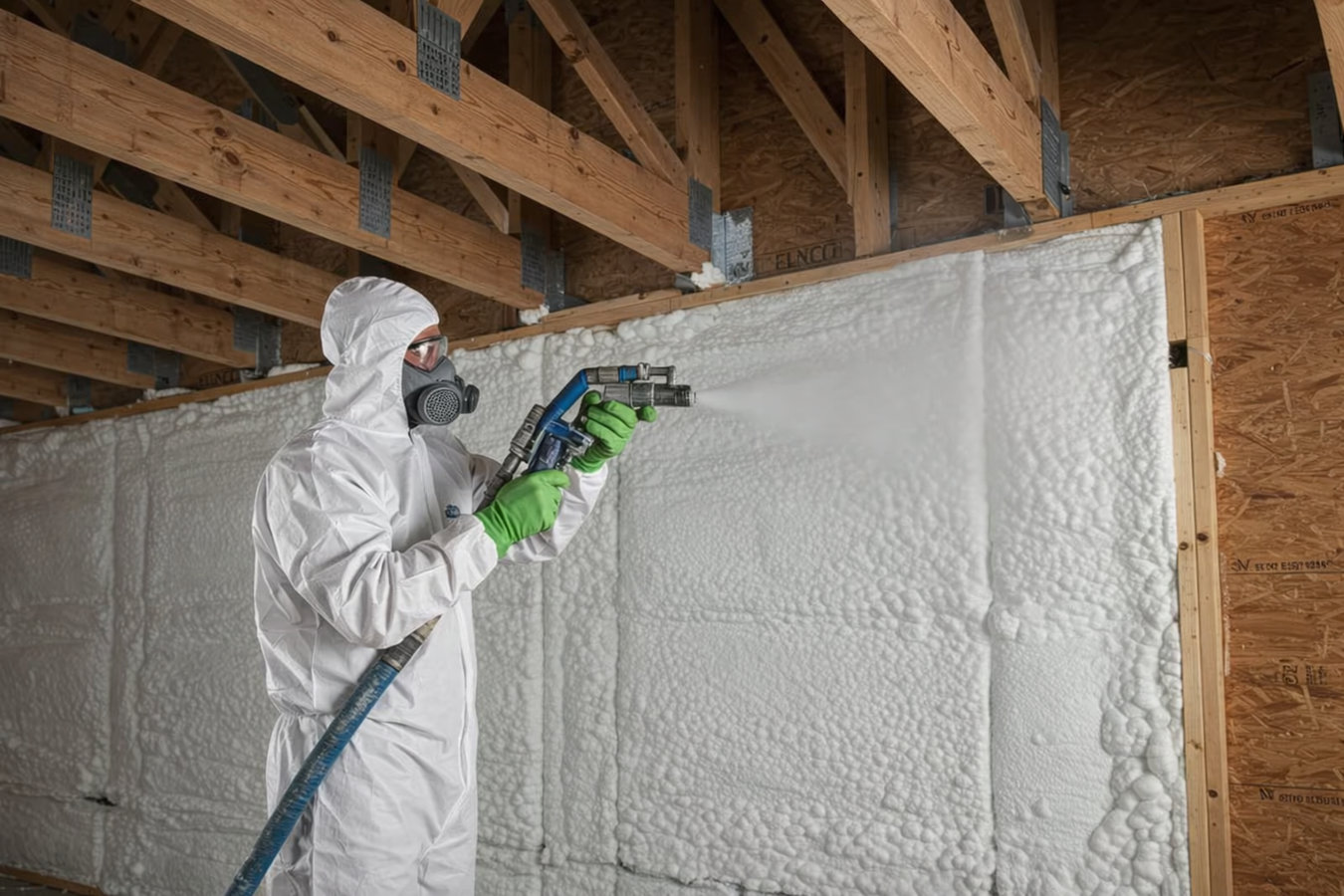
Tired of cold floors, drafts, and a heating bill that does not match your thermostat setting? Spray foam insulation seals every gap and insulates at the same time, so your home holds temperature the way it should.
Spray foam insulation in Salinas seals air leaks and insulates in a single application, expanding to fill every gap in attics, crawl spaces, walls, and rim joists. Most residential jobs are completed in one day.
Unlike batts or blown-in insulation, spray foam bonds to the surface it is applied to and does not settle or shift over time. In a city where the marine layer pushes moisture into attics and crawl spaces consistently, that air-sealing ability matters as much as the thermal performance. Many Salinas homeowners first notice the difference in their floors and utility bills within the first heating season.
Homes built in the 1950s through 1980s, which make up a large share of Salinas's housing stock, were not constructed with tight envelopes. If your home has never had spray foam applied, it may have the equivalent of a window left open all year in terms of air leakage. Pairing spray foam work with attic insulation covers both the thermal and air-sealing gaps at once.
If floors feel noticeably cold even with the heat running, the underside of your home likely has little or no insulation. In Salinas, cool marine air settles low at night and crawl space temperatures drop significantly, making uninsulated floors one of the most common comfort complaints.
Salinas's marine layer pushes moisture into the lowest and highest parts of your home year-round. If you have seen water stains, damp insulation, or smelled something musty in the crawl space or attic, moisture is getting in and your current insulation is not stopping it.
Hold your hand near an outlet on an exterior wall on a cool Salinas morning. If you feel cool air moving, outside air is entering through gaps in the wall cavity. These leaks add up across a whole house and are exactly what spray foam is designed to stop.
If your heating or cooling costs seem out of proportion to your square footage, air leakage is often the culprit. Older Salinas homes built in the 1960s and 1970s were not constructed with tight envelopes, and gaps that have developed over decades let conditioned air escape constantly.
We apply both open-cell and closed-cell spray foam depending on the location and the specific problem you are trying to solve. Closed-cell foam is denser and acts as a moisture barrier, which makes it the right choice for crawl spaces, rim joists, and anywhere Salinas's persistent coastal humidity is a concern. Open-cell foam is softer and more cost-effective, and it performs well in interior walls and attic decks where moisture is not the primary issue.
Beyond the foam itself, every project starts with an honest assessment of your current conditions. We check for moisture intrusion, measure existing insulation, and confirm whether your project requires a permit under California's energy standards before any work begins. If you are also dealing with insufficient closed-cell foam insulation coverage in the crawl space, we can address both in a single visit.
We work on attics, crawl spaces, walls, rim joists, and garage ceilings. Commercial properties in the Salinas area are welcome as well.
Interior walls, attic decks, and spaces where cost efficiency matters and moisture is not the main concern.
Crawl spaces, rim joists, and any area where Salinas's coastal humidity requires a dedicated moisture barrier.
Spray foam applied directly to the roof deck or attic floor creates a continuous air barrier that blown-in insulation alone cannot match.
Encapsulates the crawl space underside to stop cold air, moisture, and pests from entering your living space.
Salinas sits just a few miles from Monterey Bay, and the marine layer that rolls in most mornings keeps the city cool, damp, and different from the hot, dry California many people picture. That persistent moisture in the air is hard on homes. It works its way into attics and crawl spaces year-round, not just in winter, and it accelerates the degradation of older insulation materials. Closed-cell spray foam addresses both problems at once because it acts as a moisture barrier as well as an insulator.
A large share of the housing stock in neighborhoods like Alisal, Sherwood Park, and the areas around Old Town was built in the 1950s through 1970s, before California's current energy standards existed. Many of these homes have never had their crawl spaces properly insulated or sealed. The gaps that have accumulated over decades let both cold air and moisture in continuously, which is why homeowners in these areas tend to see the biggest improvement after a spray foam project.
We serve all of Salinas and the surrounding region, including Monterey, Seaside, and Marina. Agricultural dust from the Salinas Valley also works its way into homes through gaps in the building envelope, affecting indoor air quality. Spray foam's air-sealing properties reduce those pathways significantly.
We respond within 1 business day. On the call, we ask a few basic questions about your home's age and what problems you have noticed, so we arrive prepared.
A contractor visits your home to inspect the attic, crawl space, or walls. We measure the area, check for moisture, and confirm whether a permit is needed. You receive a written estimate before any work is scheduled.
The crew masks off fixtures and surfaces, then applies the foam. Most residential jobs are completed in a single day. You will need to be out of the home for the day plus at least 24 hours after the work is done.
We give you a specific re-entry time in writing before we start. If a permit was pulled, we coordinate the inspection for you. You can expect to notice a difference in comfort within the first few days.
We respond within 1 business day. There is no obligation to book after your estimate. Once you submit, someone from our office will call to schedule a free on-site assessment at a time that works for you.
(831) 243-7355Every project starts with a free written estimate and a clear scope of work. Our experienced crews document the work with photos, so you know exactly what was installed on your property.
We come to your home, assess the actual conditions, and give you a written estimate. You pay nothing for the visit. There is no follow-up pressure campaign, just a written number you can compare against other bids.
We are based in Salinas and work in the surrounding region daily. Our crew knows the housing stock here, the permit requirements at the City of Salinas Building Division, and the specific moisture challenges that come with this coastal climate.
California's energy standards require a permit for some spray foam projects. We determine whether your job needs one and handle the application and inspection scheduling entirely. You should not have to navigate city building departments on your own.
The Spray Polyurethane Foam Alliance publishes quality standards for spray foam installation. We follow those standards on every project. If you have questions about what good work should look like, that resource is worth reading before you hire anyone.
Pair spray foam rim joist work with a full attic insulation upgrade to stop heat loss through your ceiling and roof deck.
Learn moreLearn how closed-cell foam specifically addresses moisture and structural rigidity in Salinas's coastal climate.
Learn moreSpots fill up quickly. Call now or submit your project details and we will reach out within 1 business day.