
Loading...
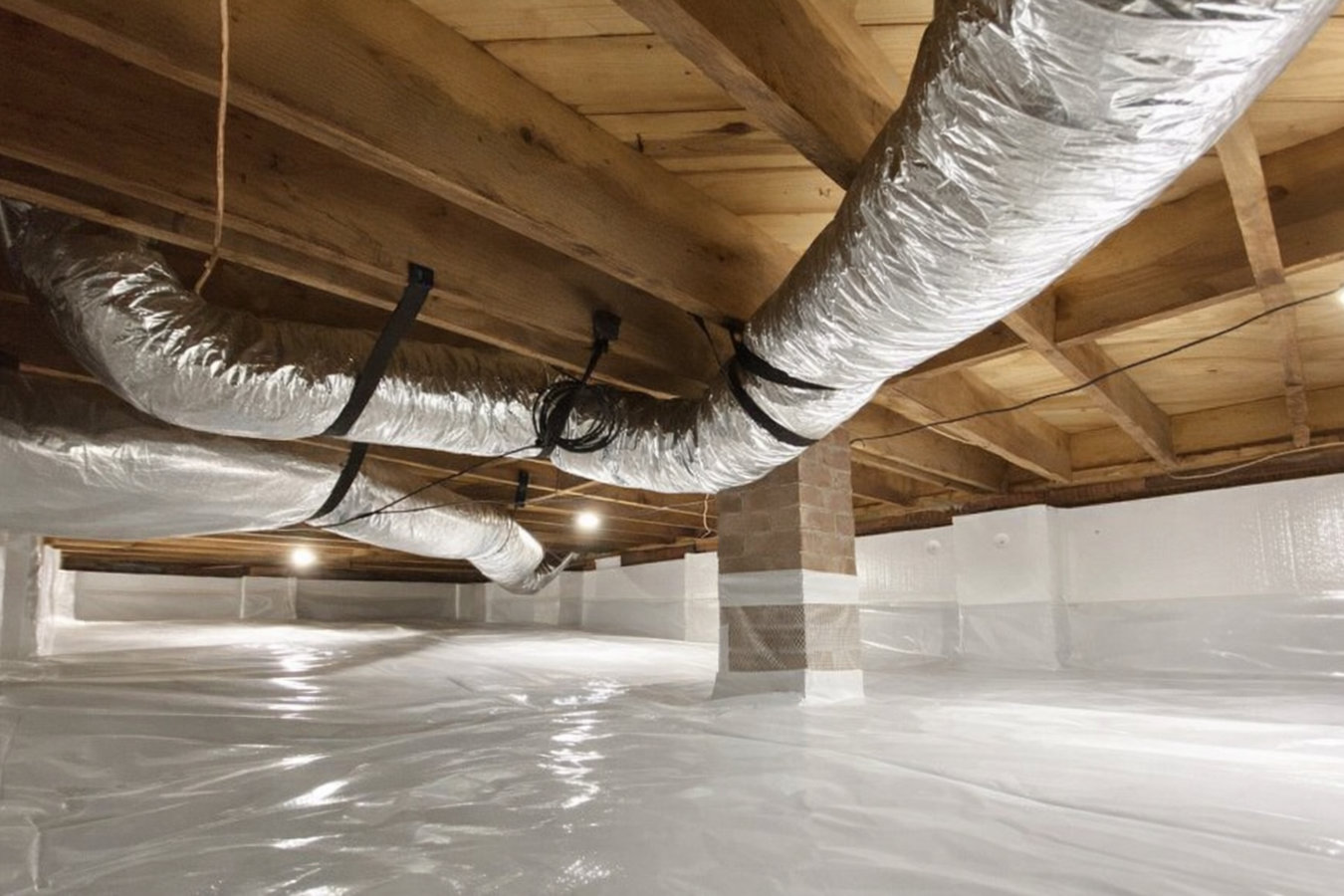
Salinas clay soil and coastal humidity push moisture into crawl spaces and basements year-round. A properly installed vapor barrier stops that moisture before it damages wood, insulation, and your home's air quality.
Vapor barrier installation in Salinas means placing thick, durable plastic sheeting across your crawl space floor, basement walls, or other exposed surfaces to block moisture from moving into your home's structure - most installations are completed in a single day and require no preparation from the homeowner.
Salinas sits in one of California's most moisture-active environments. The valley's clay-heavy soils hold water long after rain stops, the marine layer from Monterey Bay keeps outdoor humidity elevated through much of the year, and many homes here were built in an era when crawl space moisture management was not a building priority. The result is that a large portion of Salinas homes are either without any moisture protection under the floor or are working with an old, degraded barrier that has stopped doing its job.
Vapor barrier installation is closely related to our crawl space vapor barrier service, which focuses specifically on the crawl space floor. Homeowners who also need to address thermal performance should ask about pairing moisture work with our retrofit insulation service, which handles existing homes without requiring major construction.
When moisture gets into floor framing over a long period, the wood softens and begins to sag in places. In Salinas, where clay soils stay damp well into the dry season, this kind of slow damage is more common than most homeowners expect. If you notice a spot that gives a little underfoot, especially near room edges or in older parts of the house, a crawl space inspection is the right first step.
A damp or earthy smell that is strongest in the morning - when the marine layer has been sitting overnight - often comes directly from moisture rising out of an unprotected crawl space. If the smell keeps returning even after cleaning, the source is below the floor. This is one of the earliest and most consistent signals Salinas homeowners describe before discovering their crawl space has no effective barrier.
Moisture in your crawl space soaks into your floor insulation and reduces its ability to hold temperature. Your heating and cooling system has to work harder to compensate, which shows up as longer run times and higher energy bills. If your bills have crept up over the past year or two without a clear explanation, moisture in the crawl space is one of the most common causes.
Water droplets on pipes, ductwork, or the underside of floor joists in the crawl space are a direct sign that humidity is too high. This condensation forms when warm, moist soil air meets cooler surfaces, and it is an early warning that sits above mold growth and structural decay on the damage timeline. Catching it at this stage is far less expensive than addressing it after visible damage appears.
The most common application is the crawl space floor, where we roll out heavy-gauge polyethylene sheeting across the entire ground surface, overlap all seams by at least a foot, tape them with moisture-resistant tape, and run the material up the foundation walls so no soil is left exposed. We use thicker material than the California minimum because Salinas's year-round soil moisture and coastal humidity put more stress on a barrier than drier climates do.
Before the barrier goes in, we clear any debris, old material, or standing-water residue from the crawl space floor. A barrier installed over debris or wet ground will not lie flat and will degrade faster. This prep step is what separates an installation that lasts 20 or more years from one that fails in five. We document the space with photos before and after, so you have a clear record of the condition we found and the work we completed.
For homes where moisture concerns extend beyond the crawl space floor, ask about our crawl space vapor barrier service for a focused ground-level application. Homeowners planning a broader energy efficiency project should also consider our retrofit insulation service, which addresses thermal performance in existing walls, attics, and floors without major renovation.
Best for homes with an exposed-dirt crawl space where ground moisture is the primary concern, covering the entire floor surface with overlapped, taped seams.
Suited to older Salinas homes that have a degraded or torn barrier that has outlived its useful life and needs to be replaced with heavier, longer-lasting material.
For crawl spaces that have old insulation, accumulated debris, or residue from moisture damage that must be cleared before a new barrier can be properly installed.
For homeowners addressing both ground moisture and thermal performance in one project, with the vapor barrier completed first so the insulation above it can perform at its rated value.
Salinas is not a dry California city. The valley floor has clay-heavy soils that hold moisture well after rain and release it into the air below homes through most of the year. The marine layer that rolls in from Monterey Bay keeps ambient humidity elevated even when there has been no rain for weeks. Most of Salinas's rainy season arrives between November and March in concentrated bursts, and older neighborhoods with aging drainage infrastructure can see water pool near foundations before it works its way into the soil under your floors. Getting a vapor barrier installed before the rainy season starts is the simplest form of preparation.
A large share of Salinas homes were built in the 1950s through 1980s, when crawl space moisture management was not a standard part of construction. Many of these homes either have no barrier at all or a thin degraded sheet of plastic that has been sitting there for 30 to 40 years. Homeowners in Monterey, Seaside, and Marina face the same coastal humidity conditions and benefit from the same solution, and we work across all of those communities regularly.
California's energy standards affect how crawl space work is handled when it is part of a larger project. The California Department of Housing and Community Development sets residential building standards that apply when multiple systems are being modified at once. A contractor who knows those rules will tell you what applies to your project before work begins, not after.
When you call or submit a request, we ask a few basic questions and schedule a free on-site inspection. We do not quote vapor barrier jobs over the phone because crawl spaces vary too much. We respond within one business day.
A technician physically enters your crawl space to look at the ground condition, any existing barrier, moisture levels, and the overall state of the framing. The assessment typically takes 30 to 60 minutes, and we walk you through everything we found with photos before recommending any work.
After the inspection you receive a written estimate that separates prep work, materials, and labor. Take time to compare two or three quotes before deciding. A lower price is not always better if it means thinner material or skipped prep work, so compare the scope carefully, not just the number.
The crew preps the space, removes old material and debris, installs the barrier in overlapping sections with all seams taped, and secures the edges against the foundation walls. Most jobs are done in one day. Before leaving, we show you the finished installation and answer any questions you have about maintenance or what to watch for going forward.
Written estimate, no obligation. We respond within one business day and schedule at your convenience.
(831) 243-7355We install vapor barriers in Salinas homes regularly and know firsthand how the valley's clay soils and coastal humidity behave differently from conditions in drier California cities. That experience shapes the material grade we specify and the installation approach we take, particularly for homes where seasonal irrigation raises the local water table.
Our crews have years of experience installing vapor barriers in Salinas crawl spaces and know the moisture conditions here. We start with a free inspection, put the full scope in writing, and document the finished work with photos so you know exactly what was installed under your home.
Code sets a minimum thickness for vapor barriers, but we install heavier material for Salinas homes because the persistent moisture here puts more stress on the barrier over time. Thicker polyethylene holds up better to foot traffic during maintenance visits, resists punctures from soil debris, and lasts significantly longer before it needs to be replaced.
You should never have to guess what happened under your house. We photograph the crawl space before we start and again after the installation is complete. Those photos give you a clear record of the condition we found and the work we performed, which matters if you ever sell the home or need to make an insurance claim related to moisture damage.
Whether your home is a 1960s ranch house near downtown Salinas or a newer property on the east side, we bring the same thorough approach to every crawl space. When you call us, you get a straight answer about what your home needs, a written estimate, and no pressure to decide on the spot.
Thermal insulation added to existing homes without major construction, the natural next step after moisture is under control.
Learn moreFocused crawl space floor protection for homes where the ground-level barrier is the primary moisture concern.
Learn moreSalinas's rainy season arrives fast, and homes without proper moisture barriers are most vulnerable during those months. Call today or submit a request online and we will get your inspection scheduled within one business day.