
Loading...
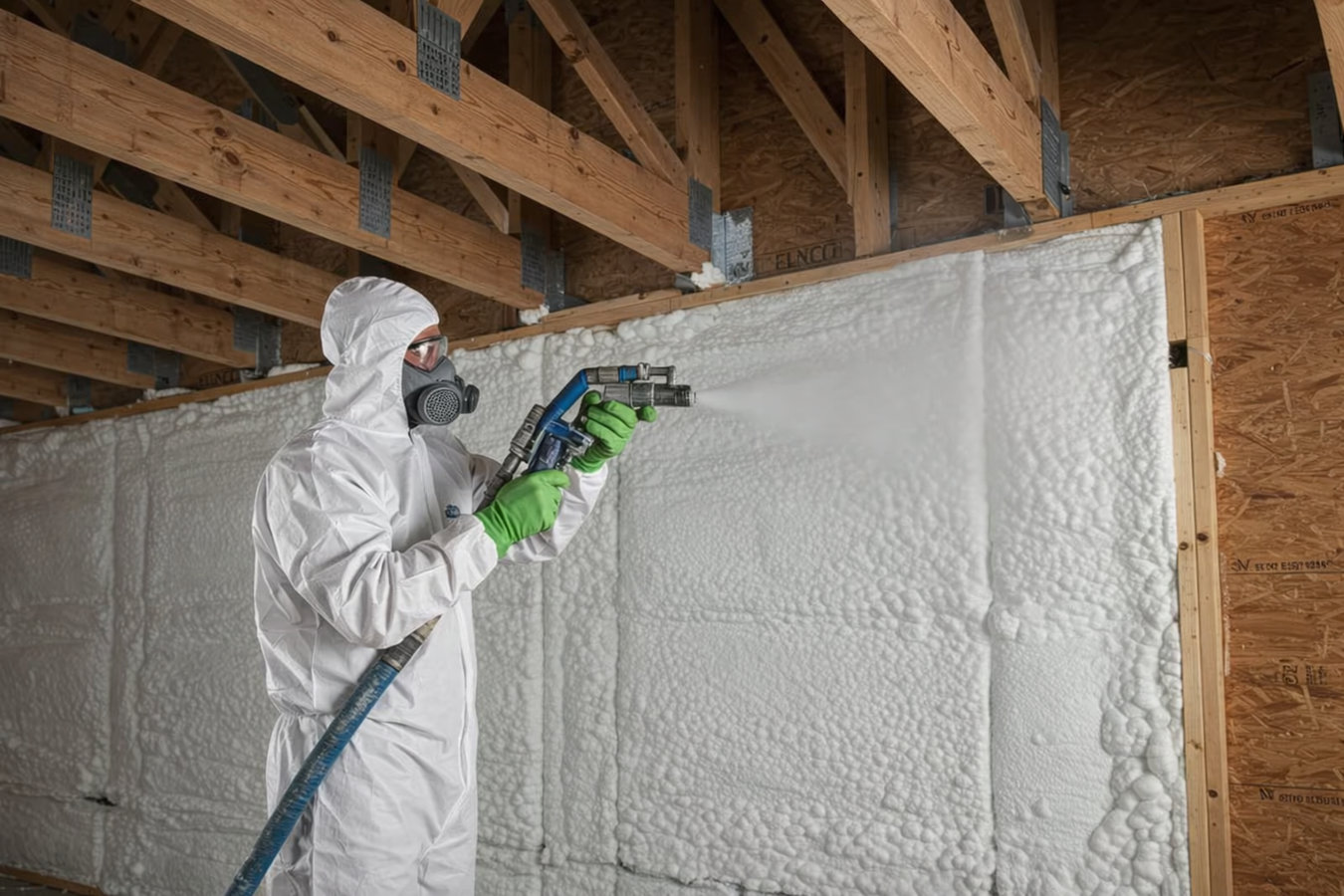
Salinas Insulation brings local insulation contractor services to Hollister, CA, covering spray foam, attic insulation, and crawl space work for the city's owner-occupied homes. We reply within one business day and provide written estimates before any work begins.
Hollister sits near the Calaveras Fault, and the ground movement that comes with it creates gaps at the rim joist, foundation sill, and around wall penetrations that older insulation cannot fill. Spray foam insulation is the most effective material for sealing those gaps permanently because it expands into irregular shapes and adheres to wood, concrete, and metal. For Hollister homes in the 1970s-2000s with little or no crawl space treatment, this is often the single highest-impact upgrade available.
Hollister summers push temperatures into the mid-90s and occasionally above 100 degrees, and without adequate attic insulation that heat radiates straight down into your living space. Most homes from the 1970s and 1980s have insulation levels well below current California standards, and many have material that has compressed or degraded over decades. A properly insulated attic keeps your HVAC system from working overtime during the hottest months of the year.
Hollister's wet winters bring concentrated rainfall that soaks the ground under older raised-foundation homes. Uninsulated crawl spaces allow cold, damp air to move directly up through floors, making the home uncomfortable and creating conditions where moisture can accumulate. Insulating and sealing the crawl space addresses both the cold floor problem and the long-term moisture risk.
Many Hollister homes built in the 1970s and 1980s have wall cavities that were never insulated, or have fiberglass batts that have shifted and left gaps over the years. Blown-in wall insulation fills those cavities without requiring major interior or exterior work, which makes it a practical choice for homeowners who want to improve comfort without a full renovation.
Hollister's seismic activity, even at low levels, gradually widens gaps around recessed lights, top plates, and where walls meet the ceiling over time. Air sealing closes those pathways before insulation is installed, which is the step that makes the difference between a good job and one that actually changes your energy bills.
Hollister sits near the Calaveras Fault, one of the more active fault systems in Central California. Even minor seismic activity, which happens regularly here, gradually shifts the framing of older homes. That movement widens gaps around windows, doors, and foundation sills over time. In homes from the 1970s and 1980s, those gaps can be significant, and standard batt insulation does nothing to seal them. A contractor who works in Hollister understands this pattern and accounts for it during installation.
The clay-heavy soils throughout San Benito County add another layer of complexity. Clay expands when wet and contracts sharply as it dries out each summer, and that seasonal movement puts stress on concrete slabs, crawl space framing, and the rim joist area at the top of the foundation wall. Homes that have been in place for 30 or more years typically have measurable gaps in those areas that need attention before any insulation upgrade will perform as intended.
Hollister's climate also runs hot in summer and wet in winter, with very little transition. Attic temperatures in July and August can exceed 150 degrees on an unshaded roof, driving heat down through inadequate insulation all day. Then from November through March, concentrated rainfall and cool nights put moisture pressure on crawl spaces and wall assemblies. Getting insulation right in Hollister means addressing both extremes, not just one of them.
We pull permits through the City of Hollister Building Division and are familiar with the permit process for energy improvement work in San Benito County. Hollister's housing stock covers a wide range, from the early 1900s Craftsman bungalows and wood-frame homes near the historic downtown district to the newer stucco tract homes on the east and south sides of town, and our crew has worked on all of them.
Highway 25 is the main corridor through Hollister, and we know the layout of neighborhoods off Westside Boulevard, San Felipe Road, and the streets around Hollister Hills State Vehicular Recreation Area. Most of our Hollister homeowners are away during the day commuting toward US-101 and the San Jose area, so we communicate clearly before and after each job and do not need someone home to supervise.
We regularly serve homeowners in Los Gatos, CA and Morgan Hill as well, which are the closest communities to the north and the ones our Hollister customers most often ask about.
Reach out by phone or through the contact form and we will reply within one business day. We will ask about your home's age, what areas concern you, and what problems you have noticed.
We come to your Hollister home to inspect the attic, crawl space, or walls before quoting anything. You receive a written estimate that lists exactly what will be done, which materials will be used, and the total cost - no surprises.
Our crew handles air sealing before any insulation goes in, then installs the material to cover the full area specified. Most Hollister jobs are completed in a single day, and we clean up before we leave.
When the job is done, we walk you through what was installed or provide photos if you were not home. You receive documentation of the work, which you will need for any rebate application or permit inspection.
We serve homeowners throughout Hollister and San Benito County. No pressure, no obligation - just a straight answer about what your home needs and what it will cost.
(831) 243-7355Hollister is the county seat of San Benito County, with a population of roughly 45,000 people and one of the higher owner-occupancy rates among California cities of its size. The city sits in a broad inland valley surrounded by agricultural land and hills, about 60 miles southeast of San Jose. Most residents live in single-family homes, and the community has a strong long-term resident base - the kind of place where homeowners invest in maintenance because they plan to stay.
The city is known nationally as the birthplace of American motorcycling, following the 1947 rally that inspired a generation of motorcycle culture, and the annual Independence Rally still draws riders to downtown every summer. The older neighborhoods near the historic downtown core include Craftsman bungalows and wood-frame homes from the early 1900s, while the eastern and southern sides of town are lined with stucco tract homes from the 1990s through 2010s.
We serve homeowners across all of Hollister's neighborhoods, including those in the established streets near downtown and the newer subdivisions off Sunnyslope Road and Hillcrest Road. Homeowners in Morgan Hill and Los Gatos, CA to the north often contact us for the same work, and we serve both communities regularly.
Seals gaps and air leaks while delivering one of the highest R-values available for new and existing homes.
Learn moreKeeps heat from escaping through the roof and reduces temperature swings throughout the year.
Learn moreLoose-fill material that fills irregular spaces and adds R-value quickly with minimal disruption.
Learn moreComprehensive insulation solutions for every area of the home, from roof to foundation.
Learn moreSafe removal of old, damaged, or contaminated insulation before new material is installed.
Learn moreProtects the underside of your floor from moisture, cold, and energy loss year-round.
Learn moreReduces heat transfer through exterior and interior walls for more consistent indoor comfort.
Learn moreCloses gaps around penetrations and framing to stop conditioned air from escaping.
Learn moreInsulates basement walls and rim joists to lower heating costs and reduce moisture issues.
Learn moreHigh-density foam that acts as both insulation and a vapor barrier in a single application.
Learn moreLightweight, flexible foam ideal for interior walls and sound dampening in residential spaces.
Learn moreTargets the attic floor bypasses where most heat loss in older homes actually occurs.
Learn moreHeavy-duty plastic sheeting that blocks ground moisture from entering your crawl space.
Learn moreControls moisture movement through walls, floors, and ceilings to prevent mold and rot.
Learn moreAdds insulation to finished spaces without major demolition using drill-and-fill methods.
Learn moreEnergy-efficient insulation solutions for offices, warehouses, and multi-unit buildings.
Learn moreServing these cities and communities.
Insulation work done right protects your home through hot summers, wet winters, and the ground movement that comes with living near the Calaveras Fault. Do not wait until the problem gets bigger.