Loading...
Serving Salinas, CA and surrounding areas(831) 243-7355
Salinas Insulation is the insulation contractor Greenfield, CA homeowners and agricultural property owners call for attic insulation, commercial insulation, and crawl space work. We have served the southern Salinas Valley corridor since 2022 and carry a California CSLB C-2 insulation contractor license on every job.
Greenfield started in 1902 when the California Home Extension Association purchased 4,000 acres from what had been Rancho Arroyo Seco — a Mexican land grant dating to 1840 — and platted it into a settler colony. Danish and Swiss farmers were among the first buyers, drawn by the organized irrigation canal system. The city was formally incorporated on January 7, 1947, named after Edward Greenfield, an early Association founder. Today it is the second most populous city in the Salinas Valley with just under 19,000 residents and holds the unofficial title of Broccoli Capital of the World, reflecting an economy still dominated by the surrounding fields.
Greenfield also sits at the gateway of the Arroyo Seco American Viticultural Area, a federally designated appellation running along Arroyo Seco Road west of US-101. Scheid Vineyards, Hahn Estates, and Paraiso Vineyards are among the producers with a presence here. The Arroyo Seco Campground in Los Padres National Forest is accessible via the same road, making Greenfield a crossroads between an agricultural community and an outdoor recreation corridor. For homeowners just 13 miles north, Gonzales is on the same regular service run, and King City lies 20 miles further south along US-101.
Greenfield's Arroyo Seco AVA wineries, produce packing sheds, and cold-storage facilities need insulation systems built for controlled-temperature environments, not standard residential specifications. Spray foam and commercial-grade blown-in systems maintain stable interior temperatures despite the valley's summer highs, protecting both product quality and refrigeration efficiency year-round.
King City is 20 miles south of Greenfield along US-101, and we serve both cities on the same southern valley corridor. Scheduling across both communities on the same dispatch run keeps lead times short for homeowners on either end.
Homes on Greenfield's original Clarke Colony streets were built before California adopted any residential energy code in 1978. Many still have the original cellulose or fiberglass fill, which has settled to a fraction of its original depth after decades in a valley environment. Bringing attic assemblies up to the Climate Zone 4 R-38 minimum is the single largest thermal improvement available to most Greenfield homeowners.
The flood-irrigated fields surrounding Greenfield keep the valley floor saturated through the growing season. Homes without a sealed vapor barrier allow ground moisture to migrate through the crawl space into the floor framing, where it gradually degrades wood over years. Insulating and sealing the crawl space together addresses both thermal and moisture problems in a single visit.
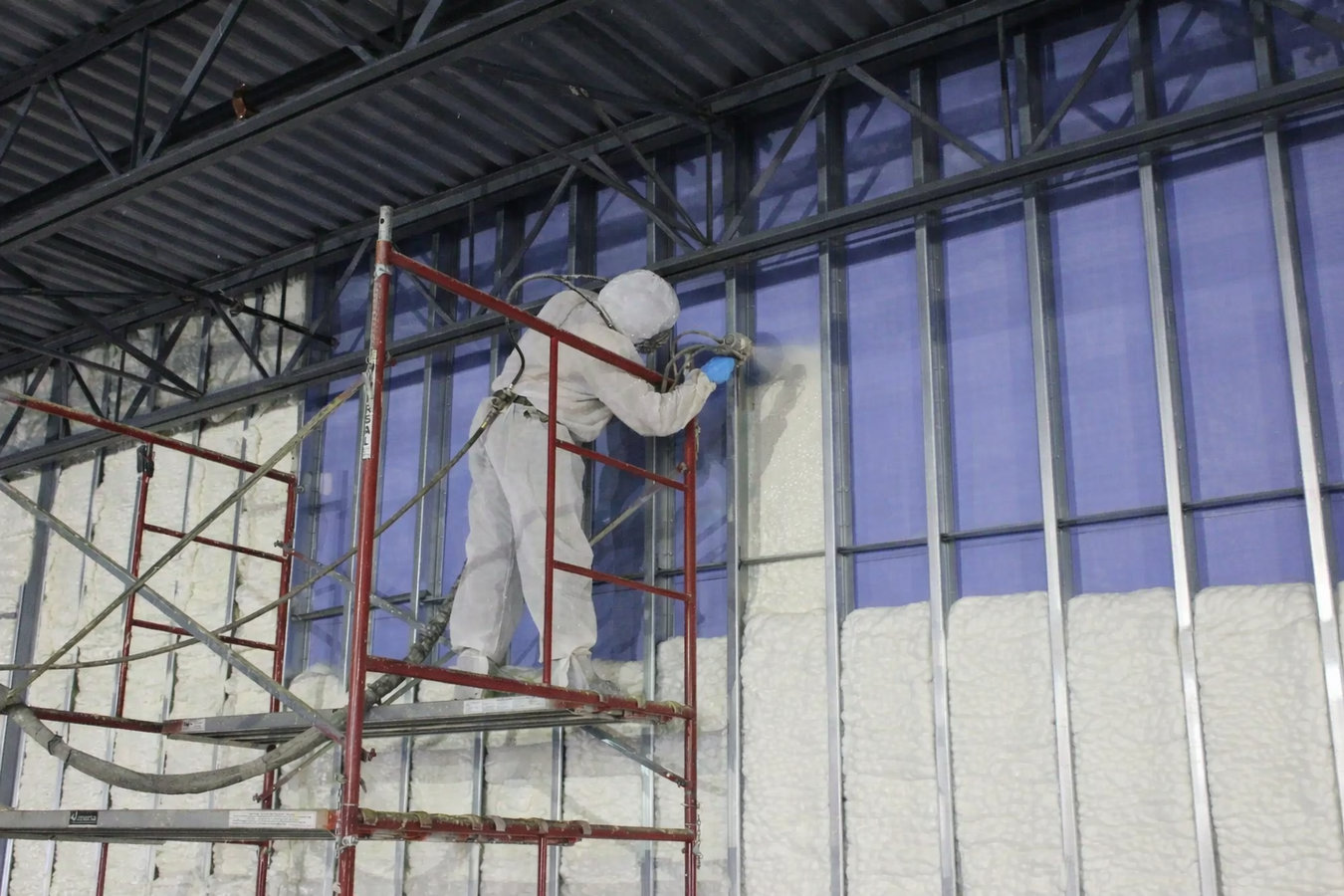
Greenfield's winery outbuildings and newer custom-built homes benefit most from spray foam, which seals and insulates in one application. On agricultural structures, it resists the moisture cycling that breaks down fiber-based products over time. On residential applications, it permanently closes the air gaps that let valley dust and warm afternoon air enter the living space.
Greenfield sits at 289 feet in the Salinas Valley, flanked by the Gabilan Range to the east and the Santa Lucia Range to the west. It is in California Energy Commission Climate Zone 4 — one zone inland from the coastal designation that covers Monterey and Pacific Grove. That distinction matters. The marine layer that moderates coastal temperatures often stops well before it reaches Greenfield. On a summer afternoon, the city can be 12 to 15 degrees warmer than Monterey, and the valley radiates that heat long into the evening.
The city's housing stock reflects its history. The original Clarke Colony settlers built before any energy code existed. Post-war construction filled the grid streets through the 1950s and 1960s, also without insulation requirements. A significant share of Greenfield homes therefore have no wall insulation at all and attic fill that has long since deteriorated below minimum performance levels. For a family of 4.62 people — the city's above-average household size — an under-insulated home means sustained discomfort for more people across more square footage.
The agricultural surroundings create two additional factors that pure climate data does not capture. Irrigation raises local moisture levels in ways that accelerate decay in unsealed crawl spaces. And fine particulate dust from surrounding fields enters homes through every unsealed gap in the building envelope — air sealing is as much a dust-control measure as a thermal one in this specific location.
Commercial insulation projects in the Arroyo Seco AVA are where our Greenfield experience shows most clearly. Winery temperature-controlled storage and produce packing facilities require California Title 24 Nonresidential Certificate of Compliance documentation before a permit is issued — coordination we handle directly with the City of Greenfield Community Development Department as part of every commercial job.
On the residential side, El Camino Real and the cross streets running east toward the Gabilan foothills are where most of our Greenfield house calls happen. The original colony-era homes on these streets have specific framing characteristics — low-slope roof assemblies, narrow joist bays — that require a different product selection than newer construction on the city's edges. The Greenfield Cultural Arts Center at 215 El Camino Real and the Greenfield Harvest Festival on the same corridor are the community anchors most locals reference when giving directions.
We cover this corridor from Soledad in the north through Greenfield and south to King City, typically scheduling the same-day run when jobs are booked in adjacent communities.
Reach us by phone or through the online estimate form. We reply within 1 business day for all Greenfield inquiries, residential and commercial.
We inspect the attic, crawl space, or commercial structure and measure existing conditions against Climate Zone 4 requirements. The written estimate covers all materials and labor with no obligation to proceed.
Most residential attic or crawl space jobs in Greenfield are completed in a single day. Commercial projects requiring permitting take longer; we coordinate the Title 24 documentation and scheduling so you do not have to track the paperwork separately.
Before we leave, we walk through the completed work with you and confirm the space is clean and secure. For commercial jobs, we provide the paperwork you need for the permit closeout inspection.
We reply within 1 business day for all Greenfield jobs, residential and commercial. There is no obligation with the estimate, and we handle all Title 24 documentation for commercial projects in the Arroyo Seco corridor.
(831) 243-7355Spray foam creates an airtight seal that stops heat transfer and air infiltration in walls, crawl spaces, and attic cavities.
Learn moreProperly insulating your attic reduces heat gain in summer and heat loss in winter, lowering energy bills year-round.
Learn moreLoose-fill cellulose or fiberglass blown into existing cavities fills gaps that batt insulation cannot reach.
Learn moreWhole-home insulation assessments and installation covering every area where conditioned air can escape.
Learn moreSafe removal of old, damaged, or pest-contaminated insulation before new material is installed.
Learn moreInsulating the crawl space floor and rim joists keeps floors warmer and reduces moisture-related issues.
Learn moreRetrofit and new-construction wall insulation that improves comfort and reduces outside noise.
Learn moreSealing gaps, cracks, and penetrations that let conditioned air escape and outdoor air infiltrate.
Learn moreInsulating basement walls and rim joists controls moisture and makes the space more comfortable.
Learn moreHigh-density closed-cell foam provides a superior R-value per inch and acts as a vapor retarder.
Learn moreLightweight open-cell foam expands to fill irregular cavities and provides effective sound dampening.
Learn moreSealing the attic floor before adding insulation prevents stack-effect heat loss through the ceiling.
Learn moreHeavy-duty polyethylene barriers on the crawl space floor block ground moisture from entering the home.
Learn moreVapor barriers protect wall and floor assemblies from condensation damage in climate-sensitive areas.
Learn moreAdding insulation to an existing home without major demolition using dense-pack and blown-in techniques.
Learn moreCommercial-grade insulation for warehouses, office buildings, and multi-unit residential properties.
Learn moreServing these cities and communities.
Call now for a no-obligation estimate on your Greenfield home or commercial building — we schedule most visits within the week.