
Loading...
Serving Salinas, CA and surrounding areas(831) 243-7355
Salinas Insulation is the insulation contractor Soledad, CA homeowners call for crawl space insulation, attic insulation, and vapor barrier work. We have served the US-101 corridor since 2022 and hold a California CSLB C-2 insulation contractor license for every project we take on.
Soledad is a city of nearly 25,000 residents tucked into the Salinas Valley along US-101, roughly 25 miles south of Salinas. The city grew from the 1791 founding of Mission Nuestra Señora de la Soledad — the 13th of California's Spanish missions — and became a formal city when the Southern Pacific Railroad arrived in 1872. Today it serves as the agricultural hub midway between Salinas and King City, with Dole Fresh Vegetables operating one of its largest processing facilities here. The landscape of row crop fields and vineyards surrounding the city reflects a community whose economy has run on farming since the Rancho San Vicente land grant era.
Soledad also bills itself as the gateway to Pinnacles National Park, whose west entrance sits 10 miles east via Highway 146. The residential streets closest to downtown contain a mix of older single-family homes and newer construction built to house the area's agricultural workforce families. For properties farther north along the valley floor, Gonzales is the next community we serve, about 8 miles up US-101.
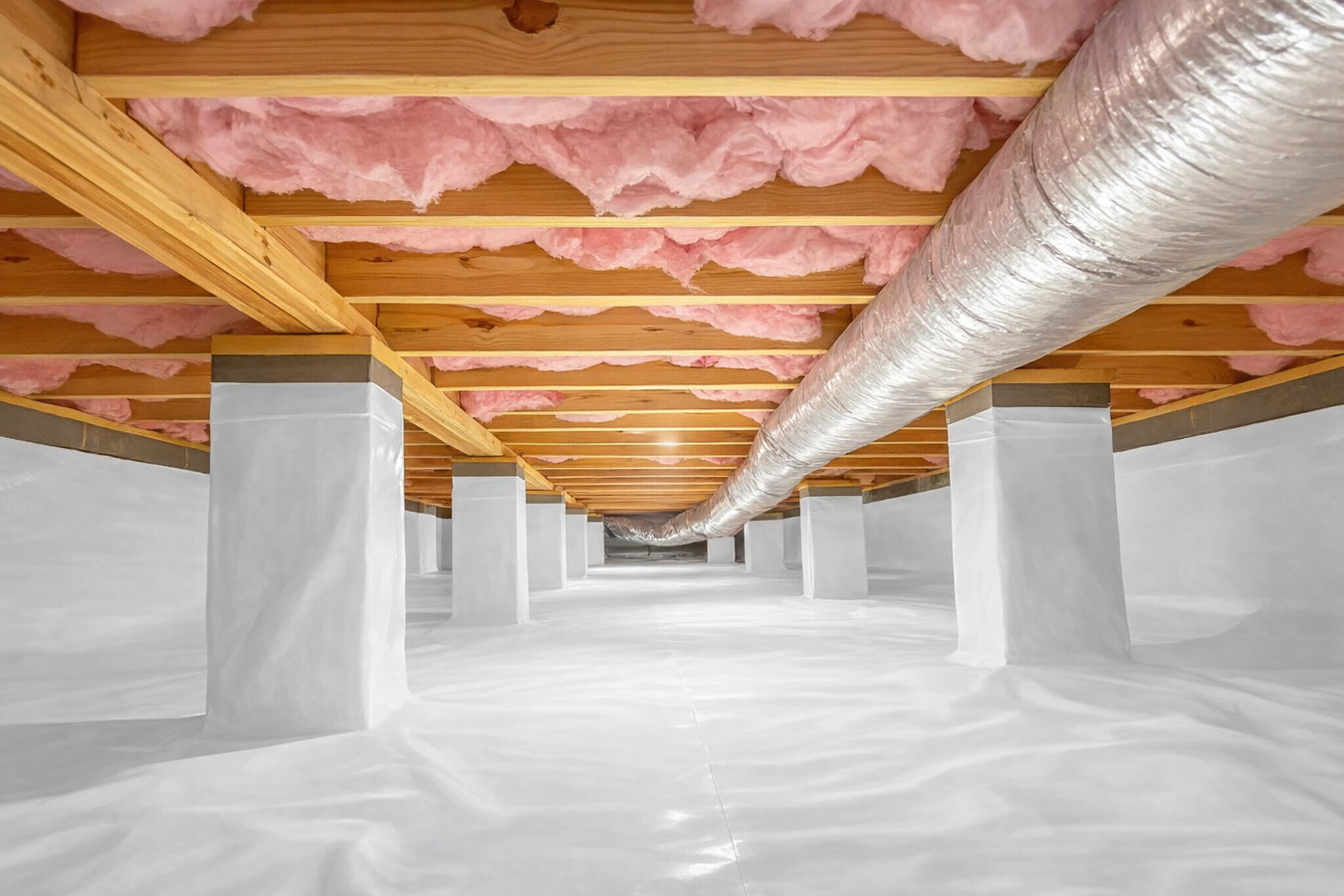
The Salinas Valley floor holds moisture from year-round irrigation, and that moisture rises into unprotected crawl spaces under Soledad homes. Insulating the floor assembly above the crawl space, combined with a proper vapor barrier, keeps floors warm and prevents the wood framing from absorbing the valley's ground moisture over the decades.
Our crews travel the US-101 corridor between Salinas and King City regularly. Gonzales sits 8 miles north of Soledad and shares the same Salinas Valley climate challenges, so many homeowners in both cities get served on the same scheduling run.
Soledad is in California Climate Zone 3, where attic assemblies require a minimum of R-38. Summer temperatures in the valley can reach the mid-to-high 90s, and an attic without adequate insulation stores heat all afternoon and releases it into living spaces after sunset, driving up cooling costs well into the evening.
Ground moisture is a specific problem in the Salinas Valley where intensive irrigation keeps the soil saturated for most of the year. A reinforced vapor barrier installed across the crawl space floor stops that moisture before it can reach the subfloor framing and any insulation in place above it.
Closed-cell spray foam applied to the rim joist and foundation walls of a Soledad crawl space provides both insulation and an air barrier in one application. Because the valley floor stays moist, spray foam's resistance to water vapor makes it a reliable alternative to fiberglass batts that can absorb ground humidity.
Soledad sits in a narrow agricultural valley with mountains on both sides. The Gabilan Range to the east and the Santa Lucia Range to the west funnel cold marine air northward most of the year — but the valley floor also traps heat on summer days when the marine layer burns off by midday. The result is a climate that swings from below-40-degree winter nights to above-90-degree summer afternoons within the same calendar year.
For homeowners, this range means insulation needs to work in both directions. The older single-family homes near downtown Soledad were built when California had no residential insulation requirement. Many still have no insulation in their exterior walls and only a few inches of loose fill in the attic, if anything at all. The Title 24 Climate Zone 3 requirements that apply to Soledad call for a minimum of R-38 in ceiling assemblies — a standard most of these homes do not meet.
Below the floor, the problem is different. The Salinas Valley's high water table and year-round irrigation keep the soil around Soledad foundations saturated for most of the year. Crawl spaces without a vapor barrier and insulated floor assembly pull that moisture upward into the living space, leading to musty air, cold floors in winter, and progressive wood rot that can compromise the floor framing over time. Addressing both the attic and the crawl space together is the most effective approach for a Soledad home.
The homes we most often work on in Soledad are on the residential streets west of US-101, where houses built between the 1940s and 1970s sit close together on smaller lots. Crawl spaces in this part of the city tend to be low-clearance — 18 to 24 inches is common — and the vapor barriers we find are usually old, undersized polyethylene sheeting that has shifted or torn at the seams. Replacing them with a full-coverage reinforced liner is the first step before any floor insulation goes in above.
The City of Soledad's Building and Safety Division, located at 248 Main Street, handles permitting for projects that cross the threshold into structural or mechanical work. For straightforward insulation top-ups and vapor barrier replacements, most jobs in this city do not require a permit pull, but we confirm the scope before every job.
We also serve properties farther south in the valley. For homeowners between Soledad and the Salinas Valley's southern end, King City and Greenfield are part of the same travel route and scheduling block.
Reach out by phone or through the contact form. We respond within one business day and schedule a visit at a time that works for you.
We inspect your crawl space and attic, note what is in place, and identify any moisture, pest, or framing issues before quoting. The estimate is free and covers the full scope of work — no surprises after you say yes.
Most crawl space and attic jobs in Soledad complete in a single day. You do not need to be present for the work, though we do ask that we have access to the relevant areas of the property.
After installation, we walk through the work with you, confirm everything is complete, and provide documentation for any PG&E rebate or tax credit applications that apply to your project.
We respond to all Soledad inquiries within one business day. The on-site estimate is free, there is no obligation to book, and we walk you through exactly what we found before any work begins.
(831) 243-7355Spray foam creates an airtight seal that stops heat transfer and air infiltration in walls, crawl spaces, and attic cavities.
Learn moreProperly insulating your attic reduces heat gain in summer and heat loss in winter, lowering energy bills year-round.
Learn moreLoose-fill cellulose or fiberglass blown into existing cavities fills gaps that batt insulation cannot reach.
Learn moreWhole-home insulation assessments and installation covering every area where conditioned air can escape.
Learn moreSafe removal of old, damaged, or pest-contaminated insulation before new material is installed.
Learn moreInsulating the crawl space floor and rim joists keeps floors warmer and reduces moisture-related issues.
Learn moreRetrofit and new-construction wall insulation that improves comfort and reduces outside noise.
Learn moreSealing gaps, cracks, and penetrations that let conditioned air escape and outdoor air infiltrate.
Learn moreInsulating basement walls and rim joists controls moisture and makes the space more comfortable.
Learn moreHigh-density closed-cell foam provides a superior R-value per inch and acts as a vapor retarder.
Learn moreLightweight open-cell foam expands to fill irregular cavities and provides effective sound dampening.
Learn moreSealing the attic floor before adding insulation prevents stack-effect heat loss through the ceiling.
Learn moreHeavy-duty polyethylene barriers on the crawl space floor block ground moisture from entering the home.
Learn moreVapor barriers protect wall and floor assemblies from condensation damage in climate-sensitive areas.
Learn moreAdding insulation to an existing home without major demolition using dense-pack and blown-in techniques.
Learn moreCommercial-grade insulation for warehouses, office buildings, and multi-unit residential properties.
Learn moreServing these cities and communities.
Crawl space moisture and summer heat are fixable problems — reach out today and we will assess your home at no cost.